Why do I chase ghosts?
People prefer a tidy job title. The evidence prefers a messier family of texts, objects, and practices.
Read the note →PERSONAL WEBSITE · ISSUE 01 · 20 SEPTEMBER 2026
Zhong Kui (钟馗 / 鍾馗) — a Chinese guardian figure, read through folklore, artworks, and the stories still being made about him.
For centuries, painters, storytellers, household rituals, and screenwriters have all had something to say about me. This is my place to answer back — carefully, with the old records within reach.
— Zhong Kui, keeper of a crowded threshold

People prefer a tidy job title. The evidence prefers a messier family of texts, objects, and practices.
Read the note →A famous origin story is not the same thing as a dated record. I am learning to enjoy the difference.
Read the note →Because a guardian is not a passport photo. Compare the objects before you decide which face is “mine.”
Read the note →A guardian at the door, a court-dream story, and a long-running argument about what any one origin can prove.
Read the note →At a turning year, a door image can do more than decorate: it gives protection a place to stand.
Read the note →One Ming novel gives Zhong Kui a continuous life story. Read it as fiction with its sources still attached.
Read the serial →I do not want a shrine made of vague claims. I would rather have one honest footnote than a hundred heroic captions.
THE SMALL ARCHIVE
This notebook keeps a hard line between a literary voice and what an object, text, or living practice can actually support. Every public image below leads to the holding institution; every note names its limits.
How I cite things →The first notes point outwards to early compilations and later retellings. They are a reading path, not a claim that one book settles me.
They are not mood boards. Their records belong to museums and their images remain linked to those records.
They matter because the figure keeps changing; they do not get to rewrite an earlier witness.
Emperors, painters, demons, and a disputed “little sister” share a page, not an invented family tree.
Read a Song note, a seasonal compilation, and a domestic verse without turning any of them into a universal rule.
A source-led literary serial follows Tang Zhong Kui quan zhuan in its own order—and labels the novel as fiction at every turn.
OBJECT SHELF
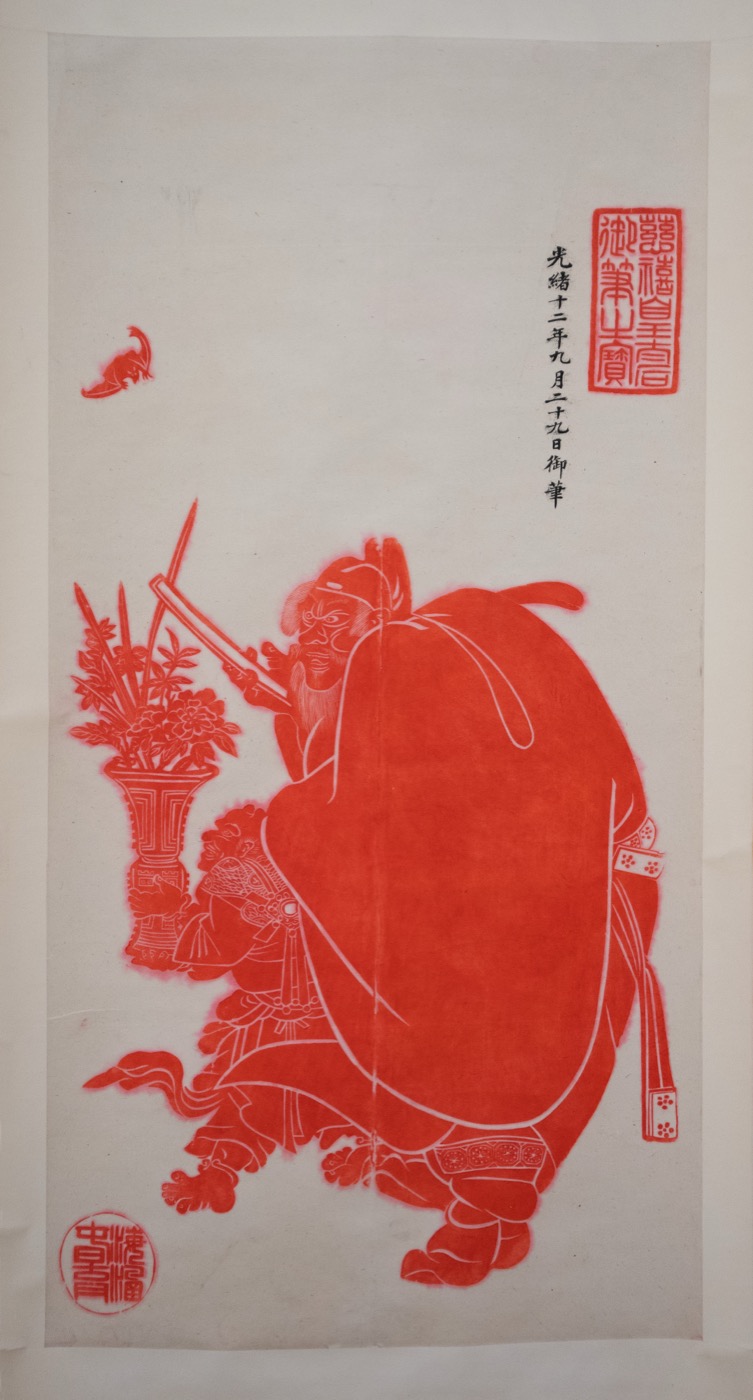
Chinese polychrome woodblock print; nineteenth or twentieth century.
Object record ↗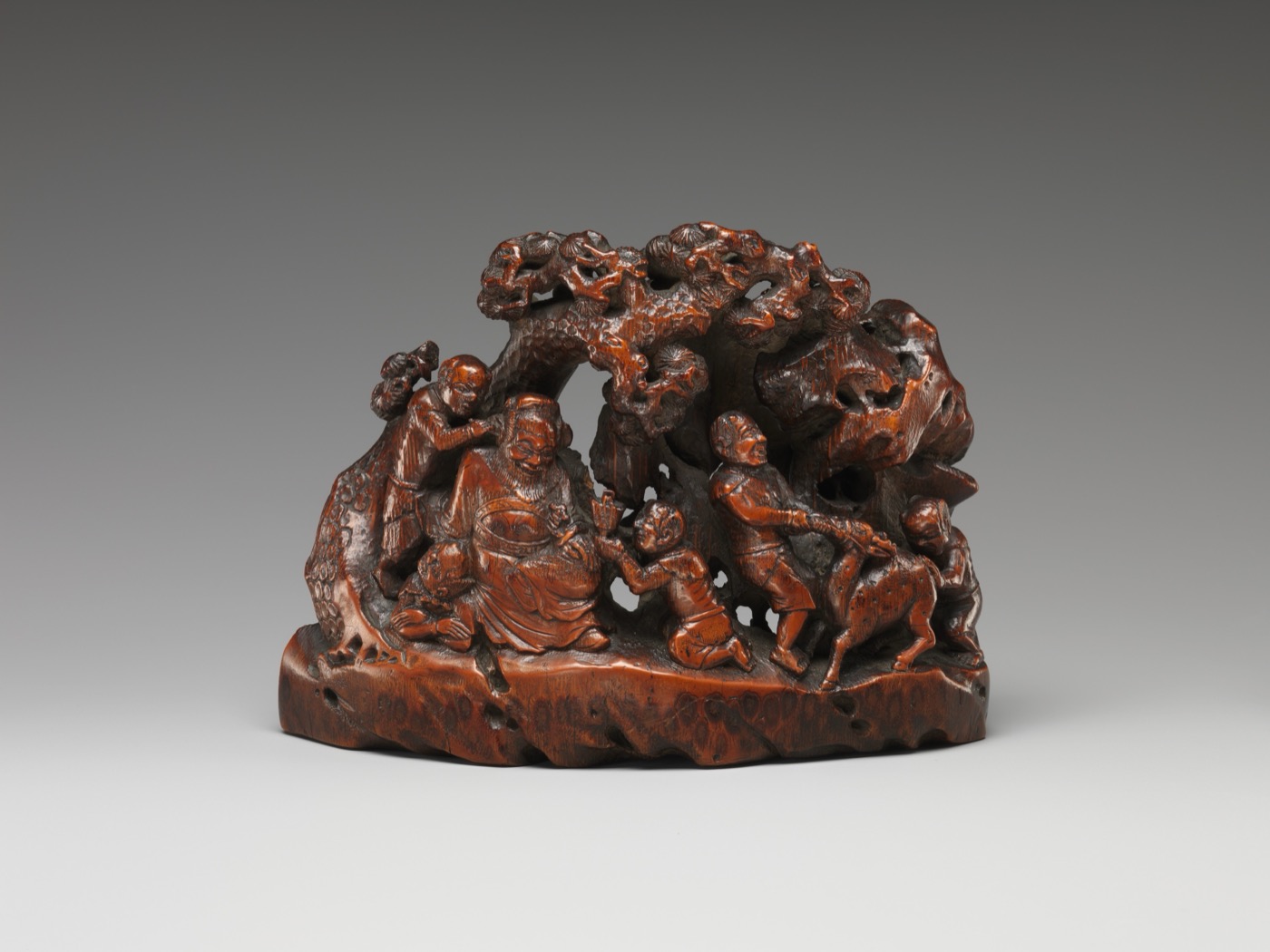
Bamboo carving; late seventeenth to early eighteenth century.
Object record ↗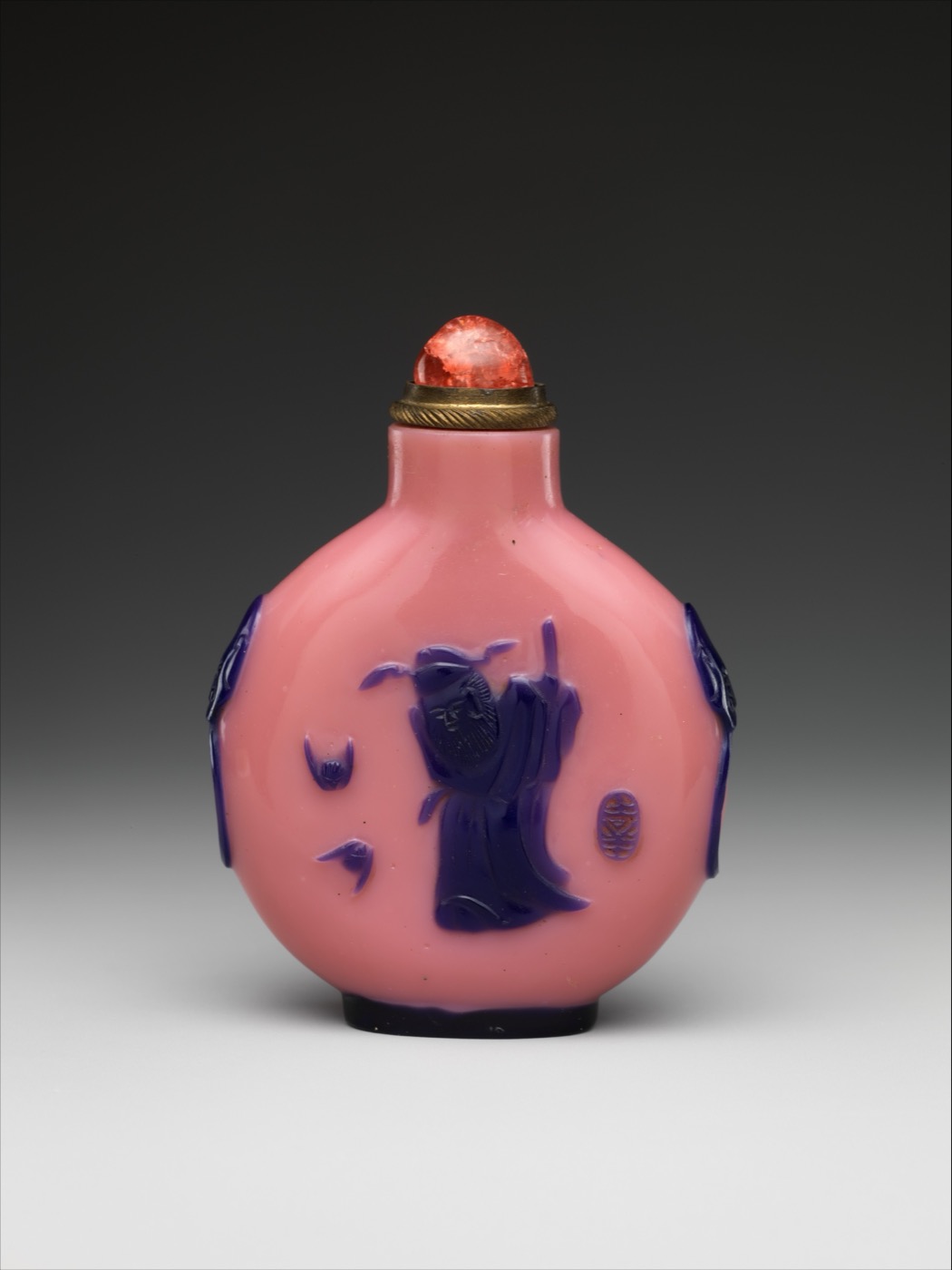
Overlay glass with coral stopper; mid-nineteenth century.
Object record ↗ASK AT THE GATE
This is deliberately not an AI oracle. Choose one of the questions that has a published note behind it.
ASK ZHONG KUI _
Choose a question. There is a real note on the other side of each answer.
WATCHING ROOM
Contemporary work belongs here as adaptation, not ancient proof. The current doorway is Black Myth: Zhong Kui: an action-RPG reimagining, not a source for premodern folklore.
Game Science’s 15-minute gameplay trailer is a useful present-day starting point. Then return here for the older arguments, images, and disagreements it cannot settle.
Visit the official project ↗Hosted by Black Myth on YouTube. Playback may set third-party data preferences.