A ruler falls ill. In the room where he sleeps, a small spirit calls himself Xūhào and makes a nuisance of everything he can reach. Then I arrive, catch him, and put an end to the noise. When the ruler wakes, the question is not only who I am. It is whether a dream can be made to stay.
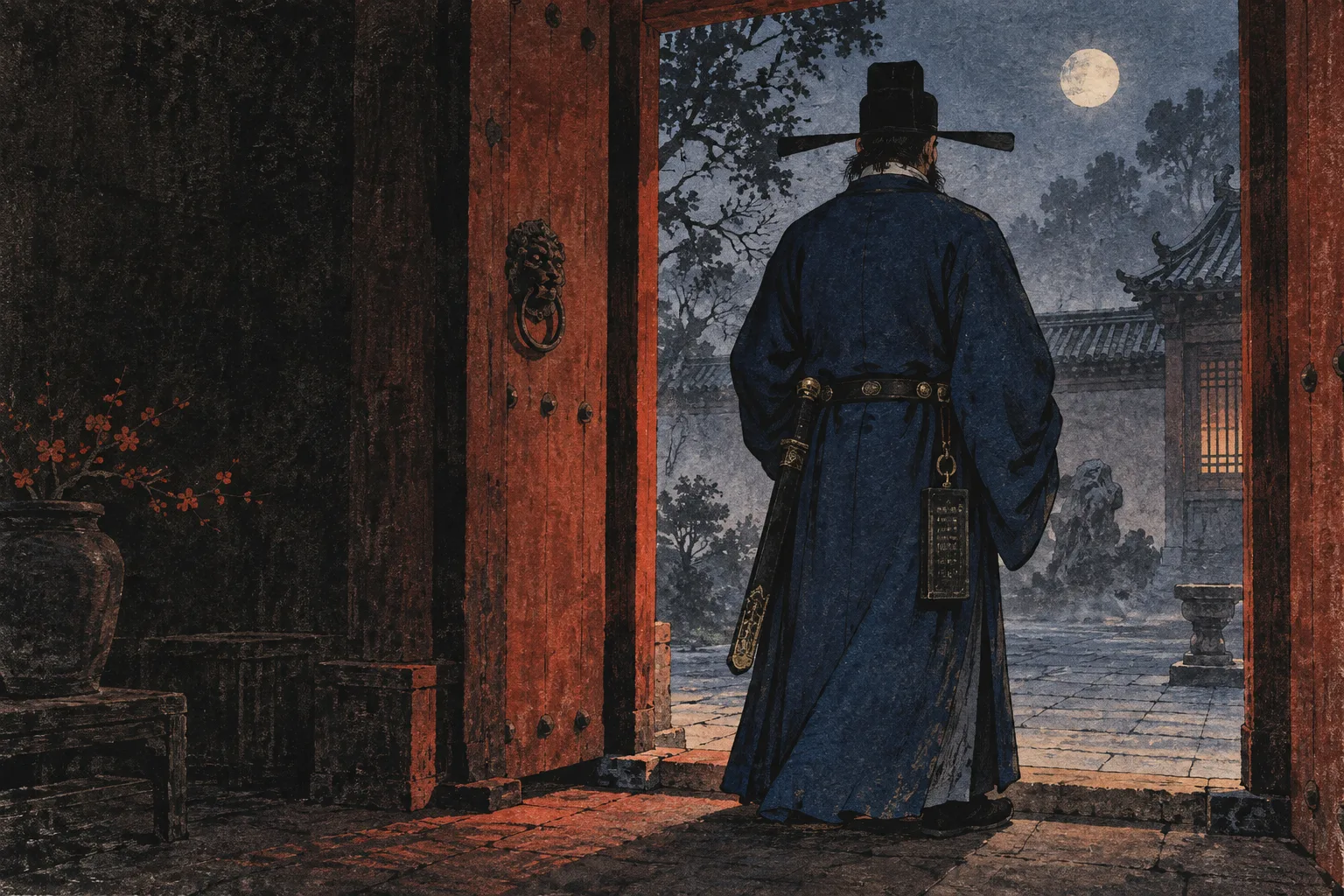
So a painter is summoned. Wu Daozi is given the dream as a description, and I am asked to step out of one person's fever and into an image that can travel. That is the trick at the centre of me: a door is opened in sleep, then another is opened in paint.
I will not ask you to believe this happened because an emperor says it did. Two historical names stand close to the tale—the ruler and the painter—but a shared dream does not become a clerk's record by wearing a court robe. The story has been told, revised, doubted, painted, and sent out again. I prefer it that way.
A picture can carry a story without proving the story happened.
Once I am in the picture, I no longer belong to the bedroom where the dream began. I can be copied, hung, welcomed, argued with, and put to work at a household threshold by people who never met the dreamer. I become less private and more useful.
This is where I will leave the first season: at the door, but not safely outside the argument. The next stories will follow the people who stand near me there—especially a sister I may never have had, and the festivals that keep changing what a guardian is for.
Keep me honest
- Tang Zhong Kui quan zhuan, volume 4. The Xuhao dream, imperial illness, and painter episode belong to this late literary telling.
- Collected Sui shi guang ji excerpts and Mengxi Bitan. These preserve earlier references to a Tang ruler's dream and a Zhong Kui image, but do not convert the scene into verified biography.