Death changes my desk. One moment I am a man the palace has dismissed; the next I am sent below to read what no living clerk wants to misplace: the names of the dead, their deeds, their punishments, and the roads assigned to them.
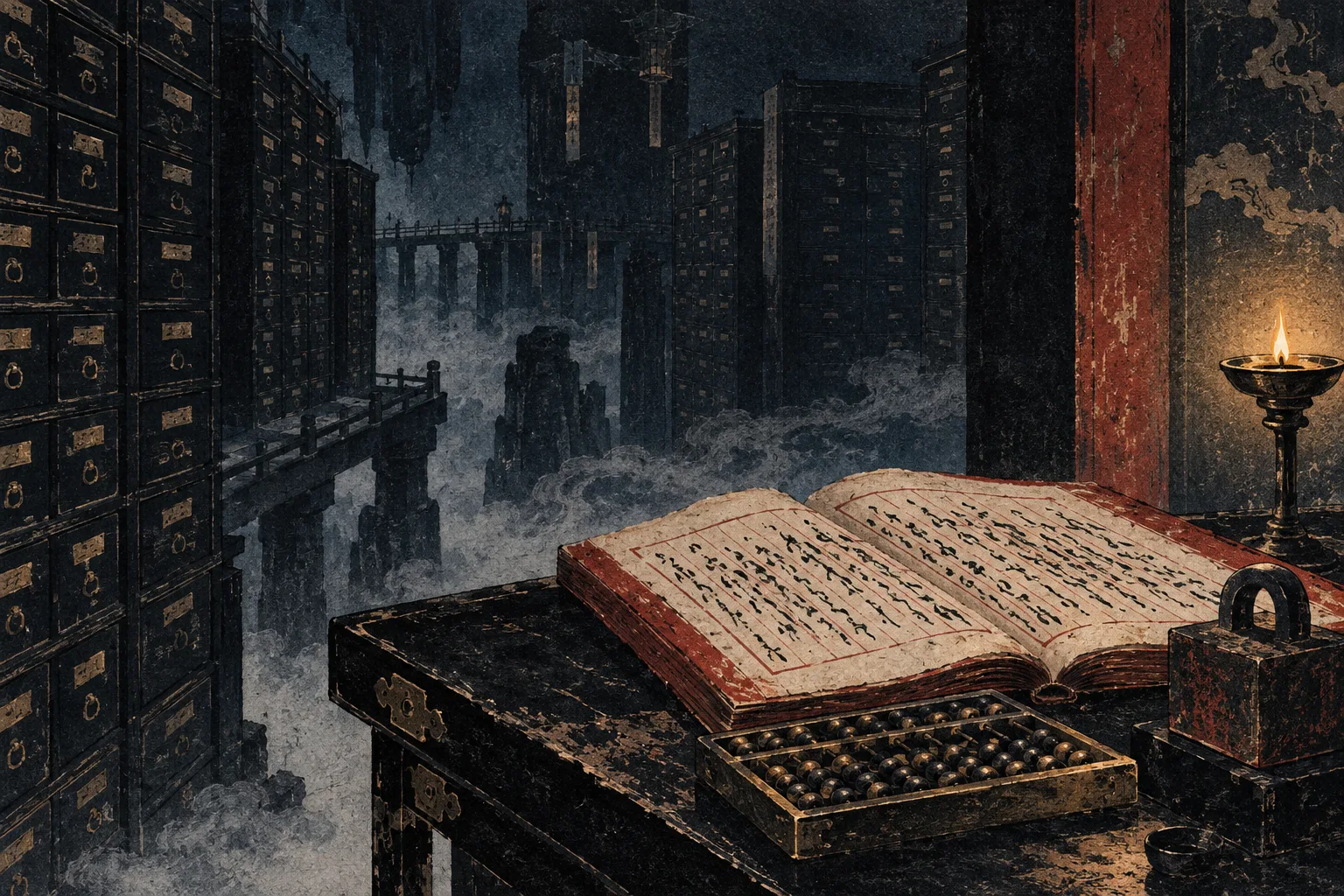
The rooms are not gentle. There are kings, gates, bridges, registers, and voices that have had too long to call themselves innocent. I will spare you the worst of what I see. The part that stays with me is quieter: a page that does not match the person in front of it.
Li Sheng tells me he has been seized in place of Li Cheng. Two names, close enough for a lazy hand and far enough apart to ruin a life. I stop the file. I ask questions. The guilty man has been bought free; the wrong man is waiting to be punished. I send the case back through the machine.
A sword makes a fine emblem. A corrected name is harder to forget.
I know something about being judged by a room that will not look carefully. Perhaps that is why this work suits me. Even beneath the world, a ledger can be careless. Even a grand system can prefer a tidy answer to the person pleading before it.
Do not take this as a road map of the next world. Take it as a story that refuses to let justice become scenery. When I leave the courts, I carry more than a weapon. I carry the habit of asking whether the record has mistaken the person.
Keep me honest
- Tang Zhong Kui quan zhuan, volume 3. The underworld office and the Li Sheng/Li Cheng mistaken-identity case are elements of this literary tale.
- Tang Zhong Kui quan zhuan, volume 4. The tale continues its inspection of underworld courts and their registers; this page does not treat them as a factual map of belief.